Melancholia

"Ich steh mit einem Fuß im Grabe"


(I am standing with one foot in the grave),

Saturday, June 29, 2013

Alcohol Addiction Relapse

  
Alcohol Addiction Relapse Might Be Thwarted By Turning Off Brain Trigger

By Jennifer O'Brien on June 23, 2013

 
Researchers at the Ernest Gallo Clinic and Research Center at UC San Francisco have been able to identify and deactivate a brain pathway linked to memories that cause alcohol cravings in rats, a finding that may one day lead to a treatment option for people who suffer from alcohol abuse disorders and other addictions.


.
In the study, researchers were able to prevent the addicted animals from seeking alcohol and drinking it, the equivalent of relapse.

“One of the main causes of relapse is craving, triggered by the memory by certain cues – like going into a bar, or the smell or taste of alcohol,”
 said lead author Segev Barak, PhD, at the time a postdoctoral fellow in the lab of co-senior author Dorit Ron, PhD, a Gallo Center investigator and UCSF professor of neurology.
 
“We learned that when rats were exposed to the smell or taste of alcohol, there was a small window of opportunity to target the area of the brain that reconsolidates the memory of the craving for alcohol and to weaken or even erase the memory, and thus the craving”he said.

The study, also supervised by co-senior author PatriciH. Janak, PhD, a Gallo Center investigator and UCSF professor of neurology, was published online on June 23 in Nature Neuroscience.
Neural Mechanism That Triggers Alcohol Memory

In the first phase of the study, rats had the choice to freely drink water or alcohol over the course of seven weeks, and during this time developed a high preference for alcohol.
In the next phase, they had the opportunity to access alcohol for one hour a day, which they learned to do by pressing a lever. They were then put through a 10-day period of abstinence from alcohol.

Following this period, the animals were exposed for five minutes to just the smell and taste of alcohol, which cued them to remember how much they liked drinking it
The researchers then scanned the animals’ brains, and identified the neural mechanism responsible for the reactivation of the memory of the alcohol – a molecular pathway mediated by an enzyme known as mammalian target of rapamycin complex 1 (mTORC1).
They found that just a small drop of alcohol presented to the rats turned on the mTORC1 pathway specifically in a select region of the amygdala, a structure linked to emotional reactions and withdrawal from alcohol, and cortical regions involved in memory processing.


They further showed that once mTORC1 was activated, the alcohol-memory stabilized (reconsolidated) and the rats relapsed on the following days, meaning in this case, that they started again to push the lever to dispense more alcohol.

“The smell and taste of alcohol were such strong cues that we could target the memory specifically without impacting other memories, such as a craving for sugar,”
 said Barak, who added that the 

Ron research group has been doing brain studies for many years and has never seen such a robust and specific activation in the brain.

Drug that Erases the Memory of Alcohol


In the next part of the study, the researchers set out to see if they could prevent the reconsolidation of the memory of alcohol by inhibiting mTORC1, thus preventing relapse. 

When mTORC1 was inactivated using a drug called rapamycin, administered immediately after the exposure to the cue (smell, taste), there was no relapse to alcohol-seeking the next day.
Strikingly, drinking remained suppressed for up to 14 days, the end point of the study. 

These results suggest that rapamycin erased the memory of alcohol for a long period, said Ron.

The authors said the study is an important first step, but that more research is needed to determine how mTORC1 contributes to alcohol memory reconsolidation and whether turning off mTORC1 with rapamycin would prevent relapse for more than two weeks.

The authors also said it would be interesting to test if rapamycin, an FDA-approved drug currently used to prevent organ rejection after transplantation, or other mTORC1 inhibitors that are currently being developed in pharmaceutical companies, would prevent relapse in human alcoholics.

“One of the main problems in alcohol abuse disorders is relapse,
 and current treatment options are very limited.” Barak said. 

“Even after detoxification and a period of rehabilitation, 70 to 80 percent of patients will relapse in the first several years. It is really thrilling that we were able to completely erase the memory of alcohol and prevent relapse in these animals. This could be a revolution in treatment approaches for addiction, in terms of erasing unwanted memories and thereby manipulating the brain triggers that are so problematic for people with addictions.”

The other co-authors of the paper are Feng Liu, PhD, Sami Ben Hamida, PhD, Quinn V. Yowell, BS, Jeremie Neasta, PhD, and Viktor Kharazia, PhD, all of the Gallo Center and UCSF Department of Neurology.

The study was supported by funds from the National Institute on Alcohol Abuse and Alcoholism and funds from the State of California for Medical Research on Alcohol and Substance Abuse administered through UCSF.


The UCSF-affiliated Ernest Gallo Clinic and Research Center is one of the world’s preeminent academic centers for the study of the biological basis of alcohol and substance use disorders. Gallo Center discoveries of potential molecular targets for the development of therapeutic medications are extended through preclinical and proof-of-concept clinical studies.


Monday, June 24, 2013

Easy to quit?


  1. Turning off brain switch may prevent alcohol relapse: … , published in the journal Nature Neuroscience, has id...

Saturday, June 22, 2013

Why Music Makes Our Brain Sing.


GRAY MATTER
Why Music Makes Our Brain Sing


By ROBERT J. ZATORRE and VALORIE N. SALIMPOOR
Published: June 7, 2013


MUSIC is not tangible. You can’t eat it, drink it or mate with it. It doesn’t protect against the rain, wind or cold. It doesn’t vanquish predators or mend broken bones. And yet humans have always prized music — or well beyond prized, loved it.

In the modern age we spend great sums of money to attend concerts, download music files, play instruments and listen to our favorite artists whether we’re in a subway or salon. But even in Paleolithic times, people invested significant time and effort to create music, as the discovery of flutes carved from animal bones would suggest.

So why does this thingless “thing” — at its core, a mere sequence of sounds — hold such potentially enormous intrinsic value?

The quick and easy explanation is that music brings a unique pleasure to humans. 

Of course, that still leaves the question of why. But for that, neuroscience is starting to provide some answers.

More than a decade ago, our research team used brain imaging to show that music that people described as highly emotional engaged the reward system deep in their brains — activating subcortical nuclei known to be important in reward, motivation and emotion. 

Subsequently we found that listening to what might be called “peak emotional moments” in music — that moment when you feel a “chill” of pleasure to a musical passage — causes the release of the neurotransmitter dopamine, an essential signaling molecule in the brain.

When pleasurable music is heard, dopamine is released in the striatum — an ancient part of the brain found in other vertebrates as well — which is known to respond to naturally rewarding stimuli like food and sex and which is artificially targeted by drugs like cocaine and amphetamine.

But what may be most interesting here is when this neurotransmitter is released: not only when the music rises to a peak emotional moment, but also several seconds before, during what we might call the anticipation phase.

The idea that reward is partly related to anticipation (or the prediction of a desired outcome) has a long history in neuroscience. 

Making good predictions about the outcome of one’s actions would seem to be essential in the context of survival, after all. 

And dopamine neurons, both in humans and other animals, play a role in recording which of our predictions turn out to be correct.

To dig deeper into how music engages the brain’s reward system, we designed a study to mimic online music purchasing. Our goal was to determine what goes on in the brain when someone hears a new piece of music and decides he likes it enough to buy it.

We used music-recommendation programs to customize the selections to our listeners’ preferences, which turned out to be indie and electronic music, matching Montreal’s hip music scene. And we found that neural activity within the striatum — the reward-related structure — was directly proportional to the amount of money people were willing to spend.

But more interesting still was the cross talk between this structure and the auditory cortex, which also increased for songs that were ultimately purchased compared with those that were not.

Why the auditory cortex? Some 50 years ago, Wilder Penfield, the famed neurosurgeon and the founder of the Montreal Neurological Institute, reported that when neurosurgical patients received electrical stimulation to the auditory cortex while they were awake, they would sometimes report hearing music. 

Dr. Penfield’s observations, along with those of many others, suggest that musical information is likely to be represented in these brain regions.

The auditory cortex is also active when we imagine a tune: think of the first four notes of Beethoven’s Fifth Symphony — your cortex is abuzz!

This ability allows us not only

- to experience music even when it’s physically absent, but also 

- to invent new compositions and 

- to re-imagine how a piece might sound with a different tempo or instrumentation.


We also know that these areas of the brain encode the abstract relationships between sounds — for instance, the particular sound pattern that makes a major chord major, regardless of the key or instrument. 

Other studies show distinctive neural responses from similar regions when there is an unexpected break in a repetitive pattern of sounds, or in a chord progression. 
This is akin to what happens if you hear someone play a wrong note — easily noticeable even in an unfamiliar piece of music.

These cortical circuits allow us to make predictions about coming events on the basis of past events. 

They are thought to: 

a. - accumulate musical information over our lifetime, 

b. - creating templates of the statistical regularities that are present in the music of our culture and 

c. - enabling us to understand the music we hear in relation to our stored mental representations of the music we have heard.


So each act of listening to music may be thought of as both:

a. - recapitulating the past and 

b. - predicting the future. 


When we listen to music, these brain networks actively create expectations based on our stored knowledge.

Composers and performers intuitively understand this: they manipulate these prediction mechanisms to give us what we want — or to surprise us, perhaps even with something better.


In the cross talk between: 

a. - our cortical systems, which analyze patterns and yield expectations, and 
b. - our ancient reward and motivational systems, may lie the answer to the question: 
does a particular piece of music move us?


When that answer is yes, there is little (in those moments of listening, at least) that we value more.


Robert J. Zatorre is a professor of neuroscience at the Montreal Neurological Institute and Hospital at McGill University.

Valorie N. Salimpoor is a postdoctoral neuroscientist at the Baycrest Health Sciences’ Rotman Research Institute in Toronto.

A version of this op-ed appeared in print on June 9, 2013, on page SR12 of the New York edition with the headline: Why Music Makes Our Brain Sing.


Source:  http://www.nytimes.com/2013/06/09/opinion/sunday/why-music-makes-our-brain-sing.html?hp&_r=0


Friday, June 21, 2013

Mindfulness and Addiction


http://www.apa.org/pubs/videos/images/4310713-475.gif

Mindfulness has its origins in Eastern philosophy, and Dr. Marlatt's approach is based on Buddhist meditation practices. He considers this approach to be nonreligious, as he describes Buddhism more as a philosophy or science than a religion, the teachings of the Buddha being a "manual of how to deal with the behavior of your mind."
Dr. Marlatt's approach focuses on teaching clients breath-focused meditation as a way to manage substance cravings. This meditation technique involves monitoring thoughts, sensations, and emotions without judging them. Because there is no judgment of the addictive craving or impulse, but merely observation of it, this opens up more choice-points than are typically apparent to someone less mindful. This aspect of the practice allows the client with addictions to see the bigger picture and to act (or not act) accordingly.
Mindfulness and meditation also offer a substitute for the addictive substance or activity. Meditation can be described as a "positive addiction" in that it can—and should—become habit forming. It has some of the same general results that addictive substances may bring, but in a nonharmful form: Meditation is relaxing, it reduces stress, and it provides a sense of immediate gratification.
This program features an example of one mindfulness technique called "urge surfing." This involves focus on the breath and a guided meditation in which Dr. Marlatt shows the client how to "surf" the craving for substances: An urge to use alcohol or other substances may be seen as a wave in that it starts small, gets bigger, crests, and finally subsides. This mindfulness technique allows the client to use the focus on the breath as a "surfboard" for riding the wave of addictive craving rather than giving in to such urges.

Quotes


“All theories are legitimate, no matter. What matters is what you do with them.” 
― Jorge Luis Borges


“Love what you do and do what you love. Don't listen to anyone else who tells you not to do it. You do what you want, what you love. Imagination should be the center of your life.” 
― Ray Bradbury


“Imagination does not breed insanity. Exactly what does breed insanity is reason. Poets do not go mad; but chess-players do. Mathematicians go mad, and cashiers; but creative artists very seldom. I am not, as will be seen, in any sense attacking logic: I only say that this danger does lie in logic, not in imagination.” 
― G.K. Chesterton, Orthodoxy


“The waking have one world in common; sleepers have each a private world of his own.” 
― Heraclitus


Insanity Explained


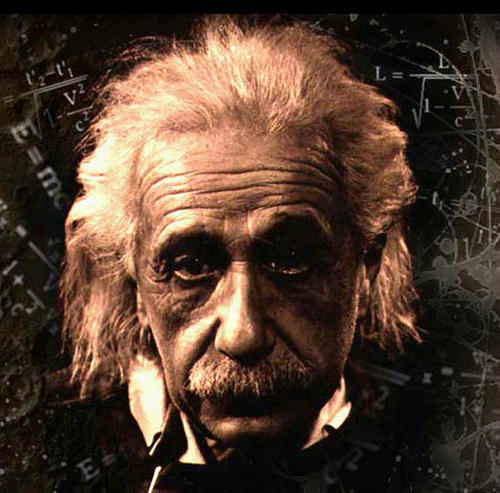
Insanity: doing the same thing over and over again and expecting different results.
Albert Einstein


Insanity is relative. It depends on who has who locked in what cage. 
 Ray Bradbury


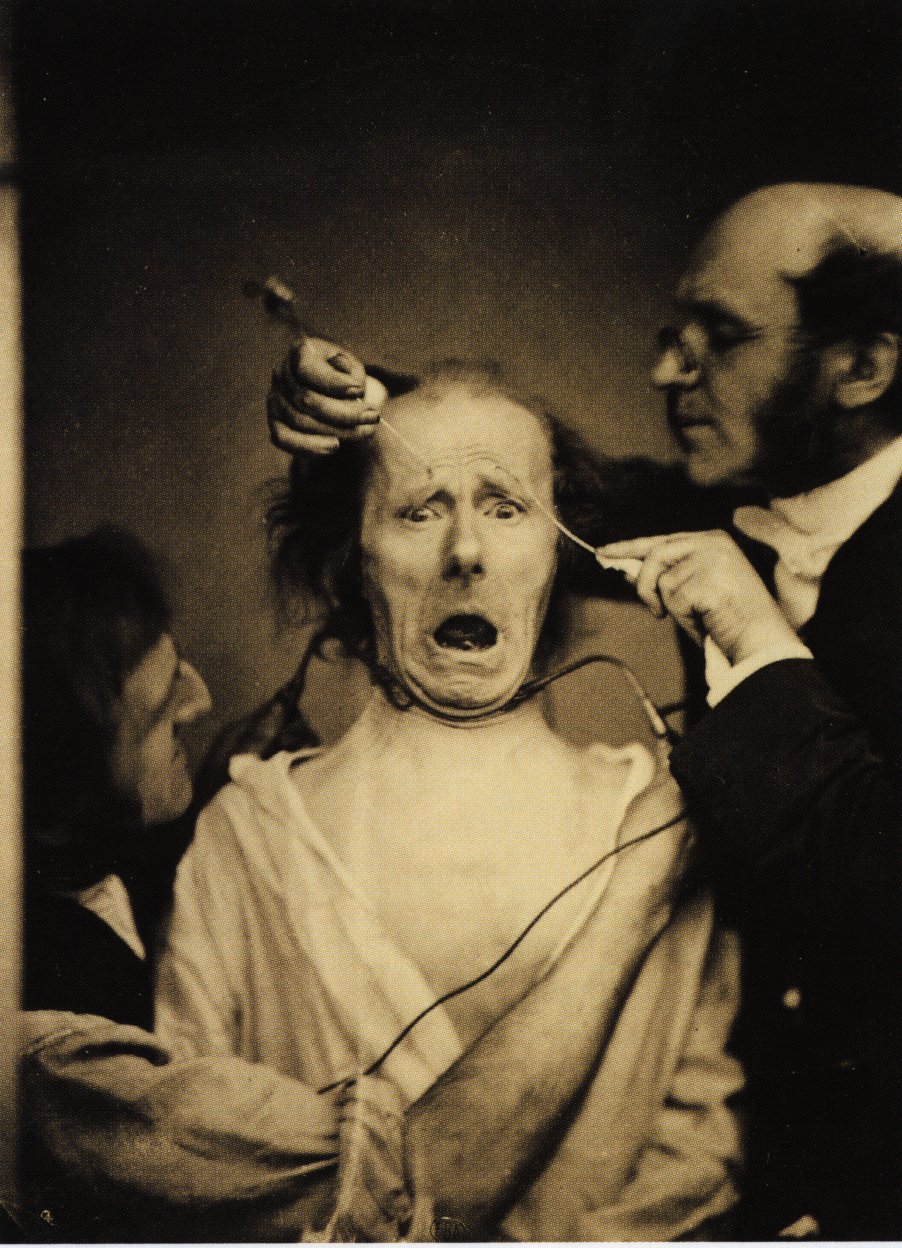
Guillaume Duchenne de Boulogne performing facial electrostimulus experiments.jpg

Duchenne de Boulogne (1801 - 1875)  
category:medecine

http://en.wikiquote.org/wiki/File:Guillaume_Duchenne_de_Boulogne_performing_facial_electrostimulus_experiments.jpg


Thursday, June 13, 2013

Neil Young Book


“At some point in life the world's beauty becomes enough. You don't need to photograph, paint, or even remember it. It is enough.”
― Toni Morrison


“Good, as it ripens, becomes continually more different not only from evil but from other good.”
― C.S. Lewis


$30.00

Book: Hardcover | 9.25 x 6.25in | 512 pages | ISBN 9780399159466 | 25 Sep 2012 | Blue Rider Press | 18 - AND UP
Neil Young
Neil Young was born in Toronto in 1945, and later went to live with his mother in Winnipeg after his parents split up. He moved to California in 1966 where he co-founded Buffalo Springfield before joining the hugely successful Crosby, Stills & Nash, and then embarking on a stellar solo career. He has been inducted not once but twice into The Rock and Roll Hall of Fame, which describes him as 'one of rock 'n' roll's greatest songwriters and performers'.
Young is an outspoken advocate of environmental issues and the welfare of small farmers - he co-founded Farm Aid in 1986. He is also active in educatonal projects for disabled children, and co-founded The Bridge School which assists children with physical impairments and communication needs.
Widely ...
Waging Heavy Peace
For the first time, legendary singer, songwriter, and guitarist Neil Young offers a kaleidoscopic view of his personal life and musical creativity. He tells of his childhood in Ontario, where his father instilled in him a love for the written word; his first brush with mortality when he contracted polio at the age of five; struggling to pay rent during his early days with the Squires; traveling the Canadian prairies in Mort, his 1948 Buick hearse; performing in a remote town as a polar bear prowled beneath the floorboards; leaving Canada on a whim in 1966 to pursue his musical dreams in the pot-filled boulevards and communal canyons of Los Angeles; the brief but influential life of Buffalo Springfield, which formed almost immediately after his arrival in California. He recounts their rapid rise to fame and ultimate break-up; going solo and overcoming his fear of singing alone; forming Crazy Horse and writing “Cinnamon Girl,” “Cowgirl in the Sand,” and “Down by the River” in one day while sick with the flu; joining Crosby, Stills & Nash, recording the landmark CSNY album,Déjà vu, and writing the song, “Ohio;” life at his secluded ranch in the redwoods of Northern California and the pot-filled jam sessions there; falling in love with his wife, Pegi, and the birth of his three children; and finally, finding the contemplative paradise of Hawaii. Astoundingly candid, witty, and as uncompromising and true as his music,Waging Heavy Peace is Neil Young’s journey as only he can tell it.

Watch a video of Neil Young, author of Waging Heavy Peace, at BEA 2012


“The poet, however, uses these two crude, primitive, archaic forms of thought (simile and metaphor) in the most uninhibited way, because his job is not to describe nature, but to show you a world completely absorbed and possessed by the human mind.”
― Northrop Frye, The Educated Imagination


“One of the tasks of true friendship is to listen compassionately and creatively to the hidden silences. Often secrets are not revealed in words, they lie concealed in the silence between the words or in the depth of what is unsayable between two people.”
― John O'Donohue, Anam Cara: A Book of Celtic Wisdom


“The universe is full of men going through the same motions in the same surroundings, but carrying within themselves, and projecting around them, universes as mutually remote as the constellations.”
― Emmanuel Mounier, Personalism


“Love is a canvas furnished by Nature and
embroidered by imagination.”
― Volaire


“I have always considered imaginative truth to be more profound, more loaded with significance, than every day reality... Everything we dream about, and by that I mean everything we desire, is true (the myth of Icarus came before aviation, and if Ader or Bleriot started flying it is because all men have dreamed of flight). There is nothing truer than myth... Reality does not have to be: it is simply what is.”
― Eugène Ionesco, Notes and Counternotes


“Things are pretty, graceful, rich, elegant, handsome, but, until they speak to the imagination, not yet beautiful.”
― Ralph Waldo Emerson


“Bare lists of words are found suggestive to an imaginative and excited mind.”
― Ralph Waldo Emerson


“Realism falls short of reality. It shrinks it, attenuates it, falsifies it; it does not take into account our basic truths and our fundamental obsessions: love, death, astonishment. It presents man in a reduced and estranged perspective. Truth is in our dreams, in the imagination.”
― Eugène Ionesco


“The faculty of memory cannot be separated from the imagination. They go hand in hand. To one degree or another, we all invent our personal pasts. And for most of us those pasts are built from emotionally colored memories.”
― Siri Hustvedt, The Shaking Woman, or A History of My Nerves


“Suspense is like a woman. The more left to the imagination, the more the excitement. ... The conventional big-bosomed blonde is not mysterious. And what could be more obvious than the old black velvet and pearls type? The perfect ‘woman of mystery’ is one who is blonde, subtle and Nordic. ... Although I do not profess to be an authority on women, I fear that the perfect title [for a movie], like the perfect woman is difficult to find.”
― Alfred Hitchcock


“An exceedingly confident student would in theory make a terrible student. Why would he take school seriously when he feels that he can outwit his teachers?”
― Criss Jami


“Some minds corrode and grow inactive under the loss of personal liberty; others grow morbid and irritable; but it is the nature of the poet to become tender and imaginative in the loneliness of confinement. He banquets upon the honey of his own thoughts, and, like the captive bird, pours forth his soul in melody.”
― Washington Irving, The Sketch Book


“       'Tis to create, and in creating live
        A being more intense, that we endow
        With form our fancy, gaining as we give
        The life we image, even as I do now.
        What am I? Nothing: but not so art thou,
        Soul of my thought! with whom I traverse earth,
        Invisible but gazing, as I glow
        Mix'd with thy spirit, blended with thy birth,
And feeling still with thee in my crush'd feelings' dearth.”
― George Gordon Byron, Selected Poems


“You know, they ask me if I were on a desert island and I knew nobody would ever see what I wrote, would I go on writing. My answer is most emphatically yes. I would go on writing for company. Because I'm creating an imaginary — it's always imaginary — world in which I would like to live.

(Interview, The Paris Review)”
― William S. Burroughs


“Thought is the greatest of pleasures —pleasure itself is only imagination—have you ever enjoyed anything more than your dreams?”
― Gustave Flaubert


“That's the way the mind works: the brain is genetically disposed towards organization, yet if not controlled, will link even the most imagerial fragment to another on the flimsiest pretense and in the most freewheeling manner, as if it takes a kind of organic pleasure in creative association, without regards to logic or chronological sequence.”
― Tom Robbins


“My readers have to work with me to create the experience. They have to bring their imaginations to the story. No one sees a book in the same way, no one sees the characters the same way. As a reader you imagine them in your own mind. So, together, as author and reader, we have both created the story.”
― J.K. Rowling


“The contract between the author and the reader is a game. And the game . . . is one of the greatest invetions of Western civilization: the game of telling stories, inventing characters, and creating the imaginary paradise of the individual, from whence no one can be expelled because, in a novel, no one owns the truth and everyone has the right to be heard and understood.”
― Carlos Fuentes, Myself with Others: Selected Essays


“Having a Vision is not enough. It must be combined with imagination, determination, faith, hope and passion. It is not enough to just stare up at the stars...we must become the stars that the stars shine down on.”
― Victoria June


“Our dreams prove that to imagine - to dream about things that have not happened - is among mankind's deepest needs.”
― Milan Kundera, The Unbearable Lightness of Being


“Writing a novel is not merely going on a shopping expedition across the border to an unreal land: it is hours and years spent in the factories, the streets, the cathedrals of the imagination. ”
― Janet Frame


“In order to survive, a plurality of true communities would require not egalitarianism and tolerance but knowledge, an understanding of the necessity of local differences, and respect. Respect, I think, always implies imagination - the ability to see one another, across our inevitable differences, as living souls. (pg. 181, Sex, Economy, Freedom, and Community)”
Wendell Berry, The Art of the Commonplace: The Agrarian Essays


More Imagination, Please


“My imagination is a monastery, and I am its monk”
― John Keats


“The basis of action is lack of imagination. It is the last resource of those who know not how to dream.”
― Oscar Wilde


“Imagination was given to man to compensate him for what he is not; a sense of humor to console him for what he is.”
― Francis Bacon


onaut
tags: creative, darkness, imagination, knowledge, navigation, spirit, survival, survive, way 28 people liked it like

“I believe in intuition and inspiration. Imagination is more important than knowledge. For knowledge is limited, whereas imagination embraces the entire world, stimulating progress, giving birth to evolution. It is, strictly speaking, a real factor in scientific research.”
― Albert Einstein, On Cosmic Religion and Other Opinions and Aphorisms
tags: evolution, imagination, knowledge, science 25 people liked it like


“A book is a device to ignite the imagination.”
― Alan Bennett, The Uncommon Reader


“Truth is a matter of the imagination.”
― Ursula K. Le Guin, The Left Hand of Darkness


“I believe in the power of the imagination to remake the world, to release the truth within us, to hold back the night, to transcend death, to charm motorways, to ingratiate ourselves with birds, to enlist the confidences of madmen.”
― J.G. Ballard


“Fairy tales had been her first experience of the magical universe, and more than once she had wondered why people ended up distancing themselves from that world, knowing the immense joy that childhood had brought to their lives.”
― Paulo Coelho, Brida


“When you're feeling lonely
and no one is around
Remember to look inside yourself
and a best friend will be found”
― Stephen Cosgrove, Maynard's Mermaid

“I spin worlds where we could be together. I dream you. For me, imagination and desire are very close.”
― Jeanette Winterson


“A man, to be greatly good, must imagine intensely and comprehensively; he must put himself in the place of another and many others; the pains and pleasures of his species must become his own. The great instrument of moral good is the imagination.”
― Percy Bysshe Shelley, A Defence of Poetry and Other Essays


Writing is lonely work, and there’s no way around it. —Frank Conroy


“The man who cannot visualize a horse galloping on a tomato is an idiot.”
― André Breton


“The possible's slow fuse is lit by the Imagination.”
― Emily Dickinson


“Imagination is like a muscle. I found out that the more I wrote, the bigger it got.”
― Philip José Farmer


“Every great advance in science has issued from a new audacity of imagination. ”
― John Dewey, The Quest for Certainty: A Study of the Relation of Knowledge and Action


“Imagination is more important than knowledge. Knowledge is limited. Imagination encircles the world."
― Albert Einstein


“The most wonderful and the strongest things in the world, you know, are just the things which no one can see.”
― Charles Kingsley, The Water-Babies


“I think imagination is at the heart of everything we do. Scientific discoveries couldn't have happened without imagination. Art, music, and literature couldn't exist without imagination. And so anything that strengthens imagination, and reading certainly does that, can help us for the rest of our lives.”
― Lloyd Alexander


“When walking alone in a jungle of true darkness,
there are three things that can show you the way:
instinct to survive, the knowledge of navigation,
creative imagination. Without them, you are lost.”
― Toba Beta, My Ancestor Was an Ancient Astronaut


“My argument against God was that the universe seemed so cruel and unjust. But how had I got this idea of just and unjust? A man does not call a line crooked unless he has some idea of a straight line. What was I comparing this universe with when I called it unjust?”
― C.S. Lewis, Mere Christianity

“Truth never damages a cause that is just.”
― Mahatma Gandhi


“If you tremble with indignation at every injustice then you are a comrade of mine.”
― Ernesto Guevara


“It is better to risk saving a guilty person than to condemn an innocent one.”
― Voltaire, Zadig


“A democracy is nothing more than mob rule, where fifty-one percent of the people may take away the rights of the other forty-nine.”
― Thomas Jefferson


“Rats and roaches live by competition under the laws of supply and demand; it is the privilege of human beings to live under the laws of justice and mercy.”
― Wendell Berry


“Who but the artist has the power to open man up, to set free the imagination? The others - priest, teacher, saint, statesman, warrior - hold us to the path of history. They keep us chained to the rock, that the vultures may eat out our hearts. It is the artist who has the courage to go against the crowd; he is the unrecognized "hero of our time" - and of all time.”
― Henry Miller, Stand Still Like the Hummingbird


“A writer who is afraid to overreach himself is as useless as a general who is afraid to be wrong.”
― Raymond Chandler, Pearls are a Nuisance


“Consciousness, unprovable by scientific standards, is forever, then, the impossible phantom in the predictable biologic machine, and your every thought a genuine supernatural event. Your every thought is a ghost, dancing.”
― Alan Moore, Promethea, Vol. 5


“We do not need magic to change the world, we carry all the power we need inside ourselves already: we have the power to imagine better.”
― J.K. Rowling


“Yes, and imagine a world where there were no hypothetical situations.”
― Jasper Fforde, First Among Sequels


“Not only is the universe stranger than we imagine - it is stranger than we can imagine.”
― Arthur Stanley Eddington


“Living too much in one's head can be dangerous.”
― Anna Godbersen, Rumors


“Whatever the mind of man can conceive and believe, it can achieve”
― W. Clement Stone


“When we are no longer children we are already dead”
― Constantin Brancusi


“I believe in the goodness of imagination.”
― Sue Monk Kidd


“The imagination is the goal of history. I see culture as an effort to literally realize our collective dreams.”
― Terence McKenna


“Who but the artist has the power to open man up, to set free the imagination? The others - priest, teacher, saint, statesman, warrior - hold us to the path of history. They keep us chained to the rock, that the vultures may eat out our hearts. It is the artist who has the courage to go against the crowd; he is the unrecognized "hero of our time" - and of all time.”
― Henry Miller, Stand Still Like the Hummingbird


“The imaginary is not formed in opposition to reality as its denial or compensation; it grows among signs, from book to book, in the interstice of repetitions and commentaries; it is born and takes shape in the interval between books. It is the phenomena of the library.”
― Michel Foucault


“When you visualized a man or a woman carefully, you could always begin to feel pity . . . that was a quality God's image carried with it . . . when you saw the lines at the corners of the eyes, the shape of the mouth, how the hair grew, it was impossible to hate. Hate was just a failure of imagination.”
― Graham Greene, The Power and the Glory


“All human accomplishment has this same origin, identically. Imagination is a force of nature. Is this not enough to make a person full of ecstasy? Imagination, imagination, imagination! It converts to actual. It sustains, it alters, it redeems!”
― Saul Bellow, Henderson, The Rain King


“Imagination has brought mankind through the Dark Ages to its present state of civilization. Imagination led Columbus to discover America. Imagination led Franklin to discover electricity. Imagination has given us the steam engine, the telephone, the talking-machine and the automobile, for these things had to be dreamed of before they became realities. So I believe that dreams - day dreams, you know, with your eyes wide open and your brain-machinery whizzing - are likely to lead to the betterment of the world. The imaginative child will become the imaginative man or woman most apt to create, to invent, and therefore to foster civilization.”
― L. Frank Baum, The Lost Princess of Oz

“Every good writer I know needs to go into some deep, quiet place to do work that is fully imagined. And what the Internet brings is lots of vulgar data. It is the antithesis of the imagination. It leaves nothing to the imagination.”
― Jonathan Franzen


“Use your imagination not to scare yourself to death but to inspire yourself to live.”
― Adele Brookman


“An imagination is a powerful tool. It can tint memories of the past, shade perceptions of the present, or paint a future so vivid that it can entice... or terrify, all depending upon how we conduct ourselves today. ”
― Jim Davis


“You may think I’m small, but I have a universe inside my mind.”
― Yoko Ono


“your brain is wider than the sky”
― Emily Dickinson


“Let the first act of every morning be to make the following resolve for the day:

- I shall not fear anyone on Earth.
- I shall fear only God.
- I shall not bear ill will toward anyone.
- I shall not submit to injustice from anyone.
- I shall conquer untruth by truth. And in resisting untruth, I shall put up with all suffering.”
― Mahatma Gandhi
tags: bravery, god, goodness, humanity, justice, kindness, peace, suffering


Quotes about Imagination


“If you can dream it, you can do it.”
― Walt Disney Company


“Vision is the art of seeing things invisible.”
― Jonathan Swift


“Lovers and madmen have such seething brains
Such shaping fantasies, that apprehend
More than cool reason ever comprehends.

― William Shakespeare, A Midsummer Night's Dream


“Those who make us believe that anything’s possible and fire our imagination over the long haul, are often the ones who have survived the bleakest of circumstances. The men and women who have every reason to despair, but don’t, may have the most to teach us, not only about how to hold true to our beliefs, but about how such a life can bring about seemingly impossible social change. ”
― Paul Rogat Loeb, The Impossible Will Take a Little While: A Citizen's Guide to Hope in a Time of Fear


“Let us leave pretty women to men with no imagination.”
― Marcel Proust, The Captive & The Fugitive


“The world of reality has its limits; the world of imagination is boundless.”
― Jean-Jacques Rousseau


“Hate is a lack of imagination.”
― Graham Greene, The Power and the Glory


“The good writers touch life often. The mediocre ones run a quick hand over her. The bad ones rape her and leave her for the flies.”
― Ray Bradbury, Fahrenheit 451


“My imagination will get me a passport to hell one day.”
― John Steinbeck, East of Eden


“Reality can be beaten with enough imagination.”
― Mark Twain

“A blank piece of paper is God's way of telling us how hard it to be God.”
― Sidney Sheldon


“The cost of oblivious daydreaming was always this moment of return, the realignment with what had been before and now seemed a little worse. ”
― Ian McEwan, Atonement


“Imagination is the voice of daring. If there is anything godlike about God, it is that. He dared to imagine everything”
― Henry Miller, Sexus


“Writing is a job, a talent, but it's also the place to go in your head. It is the imaginary friend you drink your tea with in the afternoon.”
― Ann Patchett, Truth and Beauty


“Some might think that the creativity, imagination, and flights of fancy that give my life meaning are insanity.”
― Vladimir Nabokov


“To know is nothing at all; to imagine is everything.” 
― Anatole France


“Imagination means nothing without doing.”
― Charles Chaplin


“The tree which moves some to tears of joy is in the eyes of others only a green thing that stands in the way. Some see nature all ridicule and deformity... and some scarce see nature at all. But to the eyes of the man of imagination, nature is imagination itself.”
― William Blake


“There are no rules of architecture for a castle in the clouds.”
― G.K. Chesterton


“Because when you are imagining, you might as well imagine something worth while.”
― L.M. Montgomery, Anne of Green Gables


“An idea is salvation by imagination”
― Frank Lloyd Wright


Borges Takes a Leak
duende6